


What Is SOC 2 Compliance? Complete Guide for U.S. Businesses
For many businesses in USA, answering security questionnaires is no longer enough. Customers want independent assurance that cybersecurity and privacy practices are operating effectively. This growing expectation has made SOC 2 compliance an important consideration for organizations that store, process, or manage customer data.
Whether you're a fast-growing SaaS company, a cloud service provider, or an organization seeking to strengthen customer trust, understanding SOC 2 is becoming essential.
This guide explains SOC 2 compliance, how it works, and what U.S. organizations should know before getting started.
What Is SOC 2?
SOC 2 is an independent attestation framework developed by the American Institute of Certified Public Accountants (AICPA). It is designed to evaluate whether an organization's controls are appropriately designed and operating effectively to protect customer data.
Unlike many management system standards, SOC 2 is not a certification. Although the phrase SOC 2 certification is widely used in the industry, organizations actually receive a SOC 2 report issued by a licensed CPA firm following an independent audit. This distinction is important because SOC 2 provides an attestation of control effectiveness rather than a formal certification.
Organizations commonly pursuing SOC 2 include:
-
SaaS providers
-
Cloud service providers
-
Technology companies
-
Managed service providers (MSPs)
-
FinTech organizations
-
Healthcare technology companies
-
Data processing organizations
Across the USA, many enterprise customers now request a SOC 2 report as part of their vendor risk assessment and procurement process. Demonstrating SOC 2 compliance helps organizations build trust while showing that appropriate controls are in place to protect customer information.
Build trust with customers, partners, and enterprise buyers through a recognized SOC 2 attestation. Connect with INTERCERT to take the next step toward stronger security assurance.
Why SOC 2 Has Become Essential for Modern Businesses?
The way organizations evaluate third-party vendors has changed significantly over the past decade. Rather than relying solely on contractual assurances, businesses increasingly require objective evidence that vendors have established effective cybersecurity and data protection practices.
Several factors have contributed to the growing importance of SOC 2 compliance:
-
Increased adoption of cloud-based services
-
Rising cyber threats and ransomware attacks
-
Greater focus on third-party risk management
-
Expanding data privacy expectations
-
More rigorous enterprise procurement requirements
-
Growing customer demand for independent assurance
For organizations operating in the USA, demonstrating strong security governance can influence purchasing decisions, accelerate vendor onboarding, and strengthen long-term customer relationships.
Instead of SOC 2 as a one-time project, many organizations view it as an opportunity to improve operational maturity, enhance governance, and establish a consistent approach to managing information security risks.
Understanding the SOC 2 Trust Services Criteria
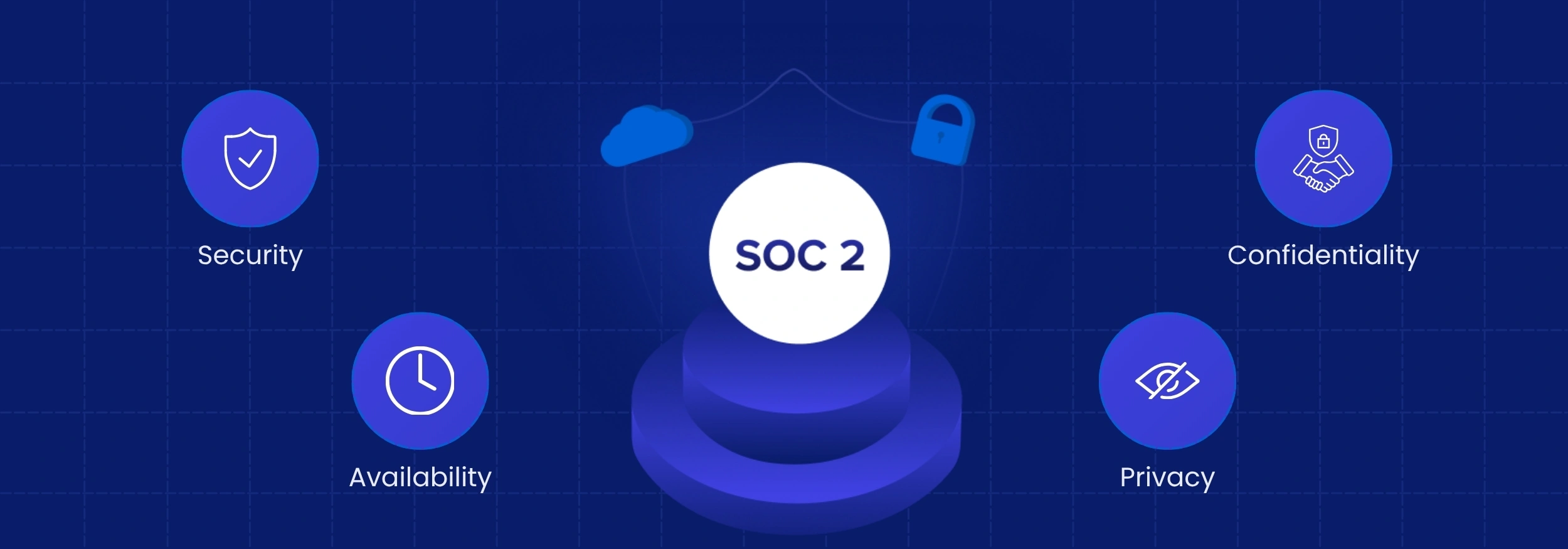
At the heart of SOC 2 compliance are the SOC 2 Trust Services Criteria (TSC). Developed by the AICPA, these criteria provide the foundation for evaluating an organization's controls related to security, availability, processing integrity, confidentiality, and privacy.
The five Trust Services Criteria include:
Security
Security, also known as the Common Criteria, is the only mandatory criterion for every SOC 2 engagement. It focuses on protecting systems and information against unauthorized access, misuse, and other security threats through controls such as access management, risk assessments, monitoring, and incident response.
Availability
This criterion evaluates whether systems are available for operation and use according to business commitments. Controls often address system monitoring, disaster recovery, backup processes, and business continuity planning.
Processing Integrity
Processing Integrity examines whether systems process data completely, accurately, and in a timely manner. Organizations implement controls to minimize processing errors and maintain reliable business operations.
Confidentiality
Confidentiality focuses on protecting sensitive business information from unauthorized disclosure. Encryption, access restrictions, data classification, and secure data disposal practices are commonly evaluated under this criterion.
Privacy
The Privacy criterion addresses how organizations collect, use, retain, disclose, and dispose of personal information in accordance with their privacy commitments and applicable legal or regulatory requirements.
Not every organization includes all five criteria within its audit scope. The selected SOC 2 Trust Services Criteria depend on the services provided, customer expectations, contractual obligations, and overall business objectives. However, Security remains mandatory for every SOC 2 engagement.
SOC 2 Type 1 vs Type 2
One of the most common questions organizations ask is about SOC 2 Type 1 vs Type 2. While both engagements evaluate an organization's controls, they differ in the level of assurance they provide. A SOC 2 Type 1 report assesses whether security controls are suitably designed at a specific point in time, answering the question of whether the appropriate controls are in place on the date of the assessment. In contrast, a SOC 2 Type 2 report evaluates not only the design of those controls but also their operating effectiveness over a defined observation period, typically several months. Because it demonstrates that controls are consistently operating as intended, a Type 2 report generally provides a higher level of assurance to customers, partners, and other stakeholders.
For many organizations in the USA, particularly SaaS providers and cloud service organizations serving enterprise customers, a SOC 2 Type 2 report has become the preferred option during vendor risk assessments and procurement reviews. Understanding the differences between SOC 2 Type 1 vs Type 2 enables organizations to choose the engagement that best aligns with their business objectives, customer expectations, and overall compliance strategy.
The SOC 2 Audit Process
The SOC 2 audit process follows a structured approach to evaluate whether an organization's controls are appropriately designed and, depending on the engagement type, operating effectively. While every organization has unique business processes and technologies, the process generally includes the following stages:
-
Define the Audit Scope: Identify the systems, services, and environments that will be included in the assessment.
-
Select the Trust Services Criteria: Determine the applicable SOC 2 Trust Services Criteria based on business operations, customer expectations, and compliance objectives.
-
Prepare Documentation: Develop and review policies, procedures, and supporting documentation that demonstrate how security controls are managed.
-
Collect Evidence: Gather objective evidence showing that controls are operating effectively, such as logs, reports, and security records.
-
Complete the Independent Audit: A licensed CPA firm performs the independent assessment and evaluates the organization's controls against the selected criteria.
-
Receive the SOC 2 Report: Upon completion of the audit, the organization receives a SOC 2 report containing the auditor's opinion and assessment findings.
Although the term SOC 2 certification is commonly used, SOC 2 engagements result in an independent SOC 2 report, not a certification. The overall SOC 2 audit timeline varies depending on factors such as organizational readiness, audit scope, selected Trust Services Criteria, and whether the organization is pursuing a Type 1 or Type 2 engagement.
Common SOC 2 Requirements
Although every SOC 2 engagement is tailored to an organization's environment, several control areas are commonly evaluated to determine whether the applicable SOC 2 Trust Services Criteria have been met.
-
Access Management and User Authentication: Controls that ensure only authorized users can access systems and sensitive information.
-
Risk Assessment and Risk Management: Processes for identifying, evaluating, and managing cybersecurity and operational risks.
-
Change Management: Procedures to review, approve, test, and document changes to systems and applications.
-
Incident Response: Established processes for detecting, responding to, and recovering from security incidents.
-
Security Monitoring and Logging: Continuous monitoring and logging activities to identify potential security events and maintain audit trails.
-
Vendor and Third-Party Risk Management: Controls for assessing and managing the security risks associated with third-party service providers.
-
Business Continuity and Disaster Recovery: Plans and procedures that ensure critical business operations can continue during disruptions and recover effectively.
-
Employee Security Awareness and Training: Regular training programs that educate employees on cybersecurity responsibilities and organizational security policies.
-
Data Backup and Recovery: Processes to protect data through regular backups and enable timely restoration when needed.
Organizations researching SOC 2 certification requirements should understand that there is no universal checklist of mandatory controls. The controls evaluated during a SOC 2 engagement depend on the selected SOC 2 Trust Services Criteria, the services the organization provides, and its overall risk environment.
Show your commitment to data security and operational excellence with SOC 2. Speak with INTERCERT to explore the right certification path for your organization.
Common Challenges Organizations Face
Organizations pursuing SOC 2 compliance often encounter similar challenges, regardless of their size or industry.
Some of the most common include:
-
Incomplete or outdated documentation
-
Inconsistent execution of security controls
-
Limited evidence demonstrating control effectiveness
-
Undefined ownership of security responsibilities
-
Rapid organizational growth that outpaces governance
-
Complex cloud environments and third-party dependencies
-
Limited visibility into vendor security practices
-
Difficulty maintaining evidence throughout the audit period
Addressing these challenges early can significantly improve audit efficiency and strengthen overall cybersecurity governance.
SOC 2 Compliance Checklist
Organizations preparing for a SOC 2 engagement can improve their readiness by following a structured SOC 2 compliance checklist. While the exact activities vary depending on the organization's environment and audit scope, the following steps are commonly included:
-
Define the Audit Scope: Identify the systems, services, and business processes that will be included in the SOC 2 engagement.
-
Identify the Trust Services Criteria: Determine which SOC 2 Trust Services Criteria apply based on customer requirements and business objectives.
-
Inventory Systems and Data Flows: Document systems, applications, infrastructure, and the flow of sensitive data throughout the organization.
-
Review Policies and Procedures: Update security policies, operational procedures, and governance documentation to reflect current practices.
-
Implement and Monitor Security Controls: Ensure the necessary controls are in place and operating consistently to address identified risks.
-
Maintain Evidence: Continuously collect and retain evidence demonstrating that security controls are functioning effectively.
-
Conduct Internal Reviews: Periodically evaluate controls and processes to identify areas requiring improvement.
-
Address Identified Gaps: Resolve deficiencies before the independent audit to strengthen overall readiness.
-
Prepare for the Independent Assessment: Organize documentation, evidence, and key stakeholders to facilitate an efficient audit process.
Understanding SOC 2 Compliance Cost
One of the most frequently asked questions about SOC 2 compliance is the SOC 2 compliance cost. There is no fixed cost for a SOC 2 engagement, as it varies based on each organization's environment, audit scope, and business complexity. Factors such as organizational size, the number of employees, the complexity of systems and cloud infrastructure, the selected SOC 2 Trust Services Criteria, whether the organization is pursuing a Type 1 or Type 2 engagement, existing security maturity, internal resource availability, and the audit fees charged by the CPA firm can all influence the overall cost. Instead of viewing SOC 2 compliance cost as simply an audit expense, organizations should consider it an investment in stronger governance, greater customer assurance, improved operational maturity, and long-term business growth.
Best Practices for Long-Term SOC 2 Compliance
Organizations that maintain SOC 2 compliance successfully typically integrate security into their everyday business operations instead of treating it as an annual project.
Some recommended best practices include:
-
Maintain policies and procedures as living documents.
-
Continuously monitor security controls.
-
Keep evidence current throughout the year.
-
Review risks regularly and update controls as needed.
-
Strengthen executive oversight and governance.
-
Train employees on security responsibilities.
-
Evaluate third-party risks on an ongoing basis.
-
Continuously improve processes based on audit findings and changing business needs.
Why SOC 2 Is More Than an Audit?
As organizations across the USA continue to strengthen their cybersecurity and data protection practices, SOC 2 compliance has become far more than a procurement requirement. It demonstrates a commitment to protecting customer information through well-designed and consistently operating controls, reinforcing confidence among customers, partners, and stakeholders.
Whether your organization is comparing SOC 2 Type 1 vs Type 2, preparing for the SOC 2 audit process, or evaluating its overall governance strategy, long-term success depends on embedding security, accountability, and continual improvement into everyday operations.
While a SOC 2 report is issued through an independent attestation by a licensed CPA firm rather than a certification, organizations can further strengthen their governance through internationally recognized management system standards. As an accredited certification body, INTERCERT provides independent certification services for globally recognized management system standards, enabling organizations to demonstrate their commitment to structured governance, effective risk management, and continual improvement.


 +1 (281) 720-3261
 info@intercert.com
 2001 Timberloch Place - Suite 500, The Woodlands, Texas 77380, United States