


VAPT Services in Africa: Why Penetration Testing Matters
Africa's digital economy is expanding at a rapid pace. From mobile banking and e-commerce to cloud computing and digital government initiatives, organizations across the continent are embracing technology to improve efficiency and drive innovation. Countries such as South Africa, Kenya, Nigeria, Ghana, Egypt, and Morocco are witnessing significant investments in digital infrastructure, creating new opportunities for businesses across every sector.
As organizations deploy web applications, cloud environments, APIs, and connected systems, cybercriminals are finding new ways to exploit security weaknesses. While many businesses invest in traditional security tools such as firewalls and endpoint protection, these solutions alone cannot identify every vulnerability before it is exploited.
This growing need for proactive cybersecurity has fueled demand for VAPT services Africa. Through vulnerability assessment and penetration testing, organizations can identify, validate, and prioritize security weaknesses before they become costly security incidents. In this guide, we'll explore why penetration testing services are becoming an essential component of cybersecurity strategies across Africa and how organizations can use VAPT to strengthen their overall security posture.
Understanding the Cybersecurity Landscape in Africa
Organizations across Africa are adopting cloud technologies, digital payment platforms, artificial intelligence, and remote working environments to remain competitive. These innovations improve operational efficiency but also introduce new cybersecurity risks that require continuous monitoring and proactive management.
The financial sector has experienced significant growth through mobile banking and digital payment services, while healthcare providers increasingly rely on electronic health records and connected medical systems. Government agencies are digitizing public services, and businesses across manufacturing, telecommunications, logistics, and retail continue to expand their digital capabilities.
At the same time, cyber threats are becoming more sophisticated. Ransomware attacks, phishing campaigns, supply chain compromises, and application-layer attacks continue to target organizations of all sizes. Third-party vendors, cloud platforms, and exposed web applications have become common entry points for attackers.
As cybersecurity risks continue to evolve, organizations are recognizing that preventing attacks requires more than traditional security controls. Regular cybersecurity testing Africa, including VAPT testing, enables businesses to identify vulnerabilities before attackers have the opportunity to exploit them.
What Are VAPT Services?
VAPT stands for Vulnerability Assessment and Penetration Testing. Although the two terms are often used together, they represent complementary cybersecurity activities that serve different purposes.
A vulnerability assessment identifies known security weaknesses across systems, networks, applications, and infrastructure. It typically uses automated tools to detect vulnerabilities, misconfigurations, outdated software, and other security issues that could increase organizational risk.
Penetration testing, on the other hand, goes a step further. Skilled security professionals simulate real-world cyberattacks to determine whether identified vulnerabilities can actually be exploited. Rather than simply listing vulnerabilities, penetration testing evaluates their real-world impact and demonstrates how attackers could gain unauthorized access to systems or sensitive information.
Together, vulnerability assessment and penetration testing provide organizations with a comprehensive understanding of their security posture. A VAPT assessment not only identifies vulnerabilities but also validates their exploitability, helping organizations prioritize remediation efforts based on actual business risk.
Regular cyber security testing, including VAPT testing, enables businesses to identify vulnerabilities before attackers have the opportunity to exploit them.
VAPT vs Vulnerability Assessment
One of the most common misconceptions is that vulnerability scanning alone provides adequate security. In reality, there are important differences between VAPT vs vulnerability assessment, and understanding these differences is essential for developing an effective cybersecurity strategy.
A vulnerability assessment focuses on discovering known security weaknesses using automated scanning tools. It provides organizations with a list of vulnerabilities, their severity levels, and recommended remediation actions. Because the process is largely automated, vulnerability assessments can be performed regularly to monitor changes in the security environment. Regular vulnerability testing helps organizations continuously identify newly introduced security weaknesses before they can be exploited by attackers.
Penetration testing, however, involves manual testing performed by experienced security professionals. Testers attempt to exploit identified vulnerabilities in a controlled manner, simulating the techniques used by real attackers. This process helps determine whether vulnerabilities can actually be leveraged to compromise systems, escalate privileges, or access sensitive information.
Rather than viewing VAPT vs vulnerability assessment as competing approaches, organizations should recognize that both are necessary. Vulnerability assessments provide continuous visibility into security weaknesses, while penetration testing validates the real-world risks associated with those findings. Together, they provide a more complete picture of an organization's cybersecurity posture.
Demonstrate your commitment to cybersecurity with VAPT Services from INTERCERT, delivering an independent evaluation of your organization's security posture and resilience.
Why Demand for Penetration Testing Is Growing Across Africa?
The growing demand for penetration testing Africa is being driven by several important business and cybersecurity trends.
Expanding Digital Infrastructure
Organizations across Africa continue to adopt cloud platforms, SaaS applications, APIs, and hybrid working environments. Each new technology introduces additional attack surfaces that require ongoing security evaluation.
Growth of Digital Banking and FinTech
Countries including Nigeria, Kenya, and South Africa have become global leaders in digital financial services. As financial transactions increasingly move online, organizations require stronger security controls to protect sensitive customer information and maintain trust.
Increasing Regulatory Expectations
Governments across the continent continue to strengthen cybersecurity and data protection regulations. Organizations are increasingly expected to demonstrate effective security practices, making penetration testing services an important component of broader compliance and risk management programs.
Customer and Enterprise Requirements
Many enterprise customers now expect vendors to demonstrate strong cybersecurity practices before entering business relationships. Independent VAPT assessment reports can provide valuable assurance that organizations are proactively identifying and addressing security risks.
Cloud Adoption
As organizations migrate critical workloads to cloud environments, traditional perimeter-based security becomes less effective. Regular VAPT testing helps identify security gaps within cloud infrastructure, identity management, APIs, and cloud-native applications before they can be exploited.
Ransomware and Emerging Threats
Cybercriminals continue to evolve their techniques, using ransomware, phishing, credential theft, and supply chain attacks to compromise organizations. Regular penetration testing Africa enables businesses to identify exploitable weaknesses before attackers do, reducing the likelihood of successful cyberattacks.
Artificial Intelligence and Automation
The growing adoption of AI is transforming both cybersecurity and cybercrime. While organizations use AI to improve security monitoring and threat detection, attackers are also leveraging automation to identify vulnerabilities more efficiently. This evolving threat landscape further highlights the importance of proactive cybersecurity testing Africa.
As digital transformation accelerates across the continent, organizations are recognizing that cybersecurity is not simply about deploying security technologies but about continuously evaluating how well those technologies perform against real-world attack scenarios. This shift is one of the key reasons why demand for VAPT services Africa continues to grow across industries.
Types of VAPT Testing
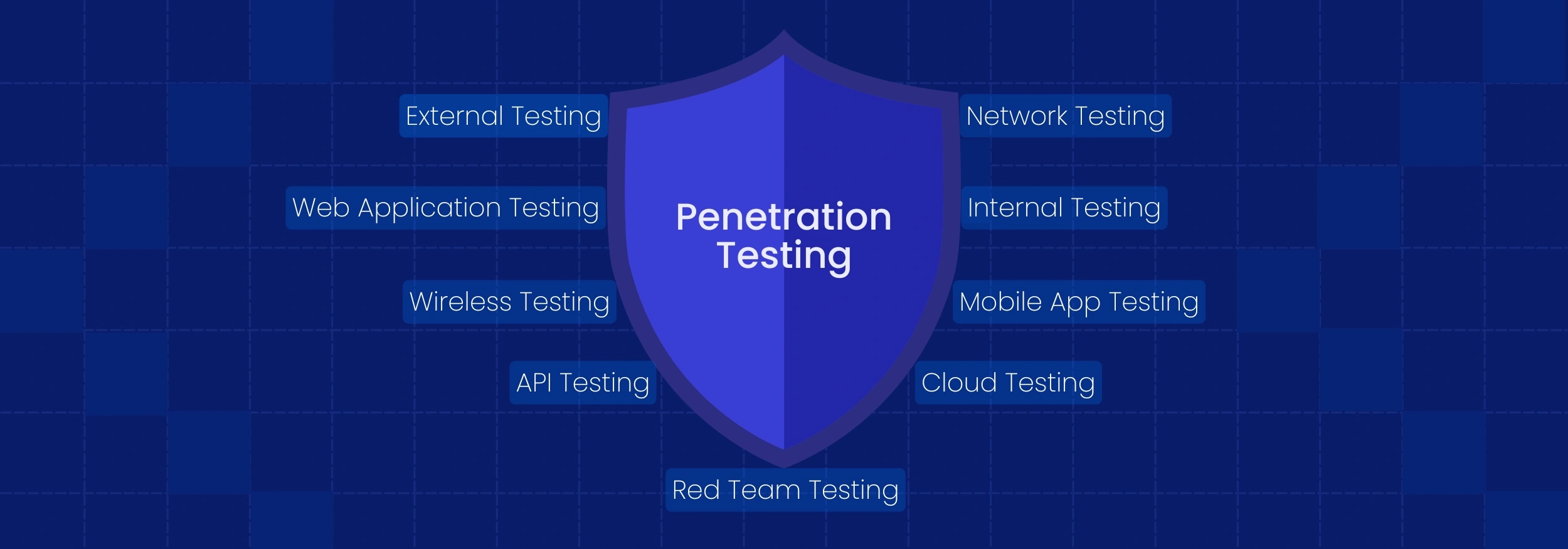
Every organization has a unique technology environment, which means security testing should be tailored to the systems and assets being protected. Depending on business operations and risk exposure, a VAPT assessment may include one or more of the following testing activities:
Network Penetration Testing
Network penetration testing evaluates internal and external network infrastructure to identify vulnerabilities that could allow attackers to gain unauthorized access. It focuses on areas such as network devices, servers, firewalls, wireless networks, and remote access services.
Depending on the organization's environment, infrastructure penetration testing may also evaluate servers, virtualization platforms, storage systems, and supporting infrastructure components that form part of the enterprise environment.
Web Application Penetration Testing
With organizations increasingly relying on web-based platforms, web application penetration testing has become one of the most requested cybersecurity services. It identifies vulnerabilities such as SQL injection, cross-site scripting (XSS), authentication weaknesses, insecure session management, and other application-layer security flaws.
In many organizations, application penetration testing extends beyond web applications to include desktop, cloud-native, and business-critical software platforms.
Mobile Application Testing
Mobile applications often process sensitive customer and business information. Security testing evaluates authentication mechanisms, data storage, encryption, API communication, and application logic to identify potential weaknesses. Mobile application penetration testing evaluates authentication mechanisms, data storage, API communication, encryption, and application logic to identify exploitable weaknesses.
Cloud Security Testing
As cloud adoption continues to grow across Africa, organizations are assessing cloud environments for configuration errors, identity and access management issues, storage security, and infrastructure vulnerabilities.
API Security Testing
Modern applications depend heavily on APIs. API security testing evaluates authentication, authorization, input validation, and data exposure risks to ensure secure communication between systems.
Wireless Security Testing
Wireless assessments identify weaknesses in Wi-Fi configurations, encryption protocols, access controls, and unauthorized wireless devices that could expose organizational networks.
Internal and External Penetration Testing
External testing simulates attacks originating from outside the organization, while internal testing evaluates risks that could arise from compromised user accounts, insider threats, or unauthorized internal access.
External penetration testing simulates attacks originating outside the organization's network, while internal penetration testing evaluates risks arising from compromised user accounts, insider threats, or unauthorized internal access.
Red Team Testing
While traditional penetration testing focuses on identifying and validating vulnerabilities within a defined scope, red team testing simulates advanced real-world attack scenarios that evaluate an organization's ability to detect, respond to, and recover from sophisticated cyberattacks. Organizations with mature security programs often use red team exercises to assess the effectiveness of their overall security operations.
Reduce cyber risk with VAPT Services that identify vulnerabilities, verify security controls, and enhance your organization's readiness against evolving cyber attacks.
How a VAPT Assessment Works?
Although every engagement is tailored to the organization's environment, a VAPT assessment generally follows a structured penetration testing methodology to ensure consistent and reliable results.
-
Scope Definition: Identify the systems, applications, networks, and environments included in the assessment.
-
Information Gathering: Collect publicly available and technical information to understand the target environment.
-
Vulnerability Identification: Use automated tools and manual techniques to identify potential security weaknesses.
-
Risk Analysis: Evaluate the severity and business impact of identified vulnerabilities.
-
Controlled Exploitation: Validate vulnerabilities through safe and authorized penetration testing to determine exploitability.
-
Reporting: Document findings, evidence, risk ratings, and practical remediation recommendations.
-
Remediation: Organizations address the identified security weaknesses based on their risk priorities.
-
Retesting: Confirm that vulnerabilities have been effectively resolved after remediation activities are completed.
Following a structured penetration testing methodology ensures that testing is repeatable, objective, and aligned with recognized industry practices.
Benefits of VAPT Services
Organizations investing in VAPT services Africa gain valuable insights into their cybersecurity posture while strengthening resilience against evolving threats.
Some of the key benefits include:
-
Identifies Hidden Vulnerabilities: Discovers weaknesses that routine security monitoring may overlook.
-
Validates Real-World Risk: Demonstrates which vulnerabilities can actually be exploited by attackers.
-
Improves Risk Prioritization: Enables organizations to focus remediation efforts on the most critical security issues.
-
Strengthens Incident Preparedness: Helps security teams understand potential attack paths before incidents occur.
-
Supports Compliance Initiatives: Assists organizations in meeting customer, contractual, and regulatory cybersecurity expectations.
-
Builds Customer Confidence: Demonstrates a proactive approach to protecting sensitive information.
-
Enhances Business Continuity: Reduces the likelihood of operational disruption caused by exploitable vulnerabilities.
-
Improves Security Investments: Provides actionable insights that help organizations allocate cybersecurity resources more effectively.
Common Mistakes Organizations Make
Despite growing awareness of cybersecurity risks, many organizations across Africa continue to make avoidable mistakes when approaching VAPT testing. Some of the most common include:
-
Relying Only on Automated Scans: Treating automated vulnerability scans as a substitute for comprehensive penetration testing services.
-
Testing Only Once: Conducting a one-time assessment instead of establishing a regular VAPT testing schedule.
-
Overlooking Web Applications and APIs: Failing to assess internet-facing applications and APIs, which are common targets for cyberattacks.
-
Ignoring Cloud and Third-Party Risks: Excluding cloud infrastructure and third-party environments from the scope of security testing.
-
Delaying Remediation: Identifying vulnerabilities but postponing corrective actions, leaving systems exposed to potential threats.
-
Maintaining Incomplete Asset Inventories: Not having a complete inventory of systems and assets, which can result in critical vulnerabilities being overlooked.
-
Skipping Retesting: Failing to verify that identified vulnerabilities have been effectively resolved after remediation.
-
Treating VAPT as a Compliance Exercise: Viewing VAPT solely as a requirement for compliance rather than an ongoing cybersecurity risk management practice.
By avoiding these common pitfalls, organizations can maximize the value of their VAPT assessment and build a stronger, more resilient cybersecurity posture.
Best Practices for Effective Penetration Testing
Organizations that gain the greatest value from VAPT services Africa typically integrate security testing into their overall cybersecurity strategy rather than treating it as an isolated activity. Some recommended best practices include:
-
Establish a Regular Testing Schedule: Conduct penetration testing services periodically based on the organization's risk profile and evolving threat landscape.
-
Test After Major Changes: Perform security testing whenever significant infrastructure, cloud, network, or application changes are introduced.
-
Expand the Testing Scope: Include cloud environments, APIs, web applications, and critical business systems within the scope of the VAPT assessment.
-
Prioritize High-Risk Findings: Address vulnerabilities based on their business impact, exploitability, and potential operational risk.
-
Assess Customer-Facing Applications: Conduct regular web application penetration testing to identify vulnerabilities that could expose sensitive data or disrupt services.
-
Evaluate Network Security: Perform network penetration testing to assess the security of internal and external network infrastructure.
-
Provide Executive-Level Reporting: Present clear risk summaries and actionable recommendations to support informed decision-making by leadership.
-
Verify Remediation Through Retesting: Retest identified vulnerabilities after corrective actions have been implemented to confirm they have been effectively resolved.
-
Support Continual Improvement: Integrate VAPT assessment findings into broader cybersecurity governance, risk management, and continual improvement initiatives to strengthen long-term resilience.
Why VAPT Services Matter for African Organizations?
As organizations across Africa continue to expand their digital operations, cybersecurity has become an essential component of business resilience. Protecting critical systems and sensitive information requires more than preventive technologies, it requires continuous evaluation of how those controls perform against real-world threats.
By investing in VAPT services Africa, organizations can identify vulnerabilities before they are exploited, prioritize remediation efforts based on actual business risk, and strengthen their overall cybersecurity posture. Whether through network penetration testing, web application penetration testing, or a comprehensive VAPT assessment, proactive security testing enables organizations to make informed decisions and continuously improve their defenses as threats evolve.
INTERCERT provides independent VAPT assessment and penetration testing services designed to help organizations evaluate their security posture through structured and methodical cybersecurity testing. By identifying and validating security weaknesses, organizations can make more informed risk management decisions and reinforce their long-term cybersecurity resilience.


 +1 (281) 720-3261
 info@intercert.com
 2001 Timberloch Place - Suite 500, The Woodlands, Texas 77380, United States