Menu

Vulnerability Assessment and Penetration Testing (VAPT)

Vulnerability Assessment and Penetration Testing (VAPT)

In today's digital landscape, where businesses and organizations depend heavily on technology for operations and communication, ensuring the strong cybersecurity is more critical than ever.

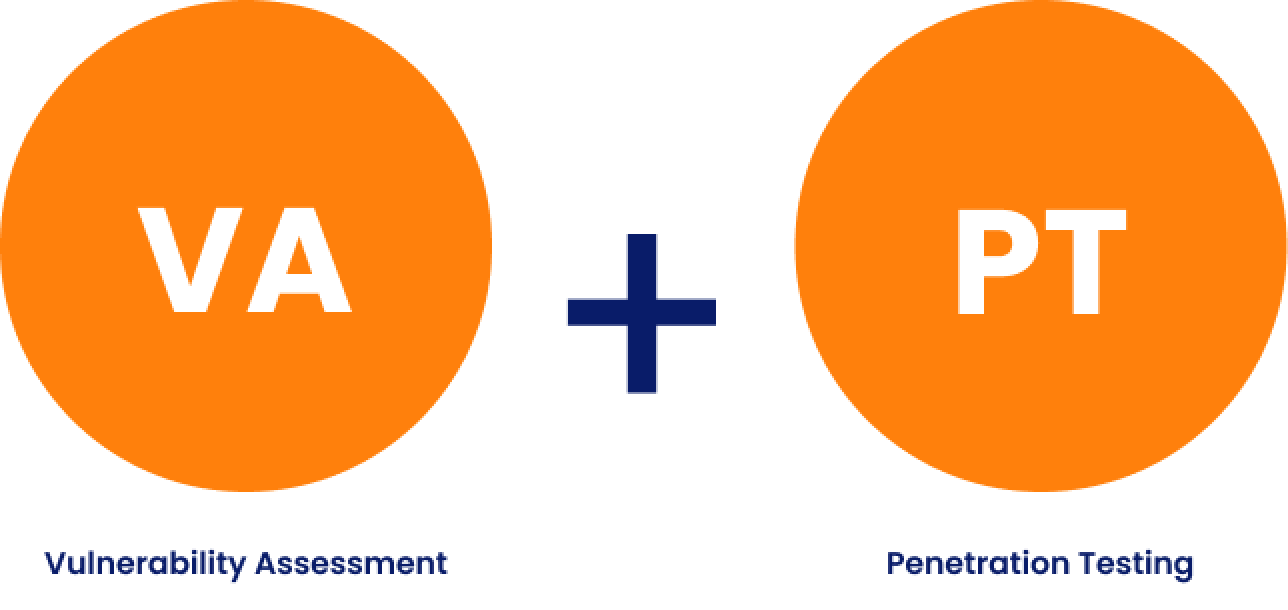
Vulnerability Assessment and Penetration Testing (VAPT) combines both Vulnerability Assessment (VA) and Penetration Testing (PT).

Vulnerability Assessment (VA)

This involves identifying and quantifying vulnerabilities in a system, network, or application. It focuses on scanning and analyzing potential weaknesses that could be exploited.

Penetration Testing (PT)

This is a proactive and simulated attack on a system to identify vulnerabilities that could be exploited by malicious hackers. It involves attempting to exploit vulnerabilities in a controlled manner to assess the security posture of the system.

Vulnerability Assessment and Penetration Testing (VAPT)

This approach integrates both VA and PT methodologies. It begins with a comprehensive vulnerability assessment to identify weaknesses and then verifies their exploitable potential through penetration testing. VAPT aims to provide a holistic view of security vulnerabilities and risks within an organization's infrastructure, helping to prioritize and mitigate potential threats effectively.

Requirement of Vulnerability Assessment and Penetration Testing

In an era where cyber threats are ever-evolving, safeguarding your organization's digital assets is important. Vulnerability Assessment and Penetration Testing (VAPT) play a vital role in identifying and addressing potential security weaknesses.

Features and Benefits of VAPT

Vulnerability Assessment and Penetration Testing (VAPT) gives businesses a complete picture of security risks by combining two approaches finding weaknesses and testing how attackers could exploit them. With VAPT, organizations gain a deeper understanding of threats to their applications, whether they come from in-house software or third-party vendors. Most of these issues can be fixed quickly once identified. By working with a VAPT provider, security teams can focus on fixing the most critical risks, while the provider continues scanning, testing and classifying new vulnerabilities.

Why VAPT is Essential?

By incorporating VAPT into your security strategy, we enable you to protect your sensitive information, build customer trust, and ensure the integrity of your IT environment.

Identify Security Weaknesses

Discover vulnerabilities in your systems, networks, and applications before attackers do.

Prevent Data Breaches

Proactively address security flaws to prevent potential breaches and data loss

Compliance

Ensure compliance with industry regulations and standards such as ISO/IEC 27001:2022, GDPR, HIPAA, and more.

Strengthen Security Posture

Regular VAPT helps in maintaining a robust security infrastructure.

Risk Management

Reduce the risk of cyber-attacks by addressing vulnerabilities with effective remediation strategies.

Assessment Methods

checkmark

Planning and Scoping

Defining the scope, objectives, and rules of engagement for the penetration test. This includes identifying the systems to be tested, the testing methods to be used, and the boundaries of the testing activities.

checkmark

Reconnaissance

Gathering information about the target system, network, or application. This may include open-source intelligence (OSINT), network scanning, and social engineering to identify potential entry points and gather details about the target.

checkmark

Scanning

Using automated tools to scan the target for vulnerabilities. This step includes identifying open ports, services, and software versions to detect known vulnerabilities.

checkmark

Exploitation

Attempting to exploit identified vulnerabilities to gain unauthorized access or control over the target system. This may involve techniques such as SQL injection, cross-site scripting (XSS), buffer overflows, and other attack vectors.

checkmark

Post-Exploitation

Assessing the impact of the exploitation. This includes determining the extent of access gained, the data compromised, and the potential damage that could be caused by an attacker.

checkmark

Reporting

Documenting the findings, including details of the vulnerabilities discovered, the methods used to exploit them, and recommendations for remediation. The report typically includes both technical details for IT teams and executive summaries for management.

checkmark

Remediation and Re-Testing

After vulnerabilities are addressed, a follow-up test may be conducted to verify that the issues have been resolved and that no new vulnerabilities have been introduced.

Types of Security Testing

checkmark

External IP Address Penetration Testing

Focuses on external-facing systems and applications, such as websites and public IP addresses, to identify vulnerabilities that can be exploited from outside the organization's network.

checkmark

Internal IP Address Penetration Testing

Conducted from within the organization's network to identify vulnerabilities that could be exploited by an insider or if an external attacker breaches the perimeter.

checkmark

Web Application Penetration Testing

Specifically targets web applications to identify vulnerabilities such as SQL injection, cross-site scripting (XSS), and broken authentication

checkmark

API Penetration Testing

API Penetration Testing involves evaluating the security of Application Programming Interfaces (APIs) by simulating real-world attacks. This process identifies vulnerabilities and weaknesses that could be exploited by attackers, ensuring the API is strong and secure.

checkmark

Mobile Application Penetration Testing

Mobile Application Penetration Testing involves evaluating the security of mobile apps to identify vulnerabilities that could be exploited by attackers.

checkmark

Infrastructure and Network Security Testing

Infrastructure and Network Security Testing is a comprehensive evaluation process that assesses the security resilience of an organization's IT infrastructure and network components. This service is essential for identifying vulnerabilities and weaknesses that could potentially be exploited by cyber attackers, thereby providing insights to enhance overall security measures and mitigate risks effectively.

checkmark

Software Security Testing

Software Security Testing checks software applications for security vulnerabilities. It aims to find and fix flaws that could be exploited by attackers, ensuring the software is secure.

checkmark

Wireless Security Testing

Wireless Security Testing evaluates the security of wireless networks to identify vulnerabilities that attackers could exploit. It ensures that wireless communications are secure.

checkmark

Cloud Configuration Security Assessment

A Cloud Configuration Security Assessment evaluates the security of your organization's cloud infrastructure. As businesses increasingly adopt cloud services for their scalability and flexibility, ensuring the security of cloud configurations becomes important. Cloud misconfigurations are a leading cause of data breaches and security incidents, highlighting the need for comprehensive assessment and mitigation strategies.

checkmark

Source Code Review

Source code review involves analyzing the programming instructions of an application to identify security vulnerabilities and coding errors. This process is essential for ensuring that the code is secure and follows best practices.

checkmark

Threat Modeling

Threat Modeling is a process of identifying, assessing, and addressing potential threats to an application or system. It helps in understanding and mitigating security risks early in the development process.

checkmark

API VAPT

API Vulnerability Assessment and Penetration Testing (VAPT) evaluates the security of APIs to identify vulnerabilities that could be exploited, ensuring secure and reliable API operations.

checkmark

Endpoint VAPT

Endpoint Vulnerability Assessment and Penetration Testing (VAPT) evaluates the security of endpoint devices such as computers, tablets, and smartphones, to identify and mitigate vulnerabilities.

checkmark

Database Vulnerability Assessment

Database Vulnerability Assessment involves evaluating the security of databases to identify vulnerabilities that could lead to data breaches or unauthorized access, ensuring data integrity and security.

checkmark

Social Engineering

Tests the organization's susceptibility to social engineering attacks, such as phishing, to evaluate employee awareness and the effectiveness of training programs.

Frequently Asked Questions

How Can We Help You?

We are here to answer all your questions.


©2026 Intercert. All Rights Reserved