


ISO 27001 and GDPR: How to Satisfy Both with One ISMS in the EU
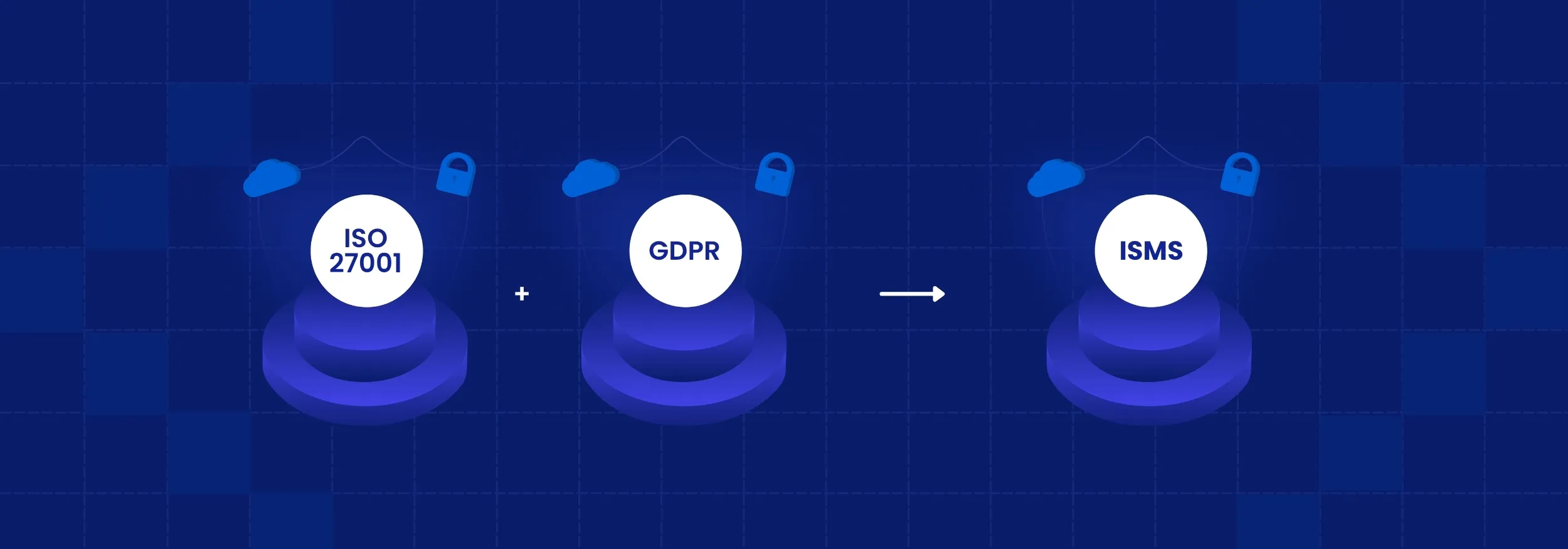
Organizations across the EU must protect sensitive information while demonstrating structured processes for managing information security and personal data responsibly. This creates a compliance challenge, as GDPR focuses on personal data protection and privacy rights, while organizations increasingly pursue ISO 27001 Certification EU to establish a mature Information Security Management System (ISMS).
A well-designed ISO 27001 and GDPR Compliance approach enable organizations to address both security and privacy requirements through a unified framework. By creating a GDPR Compliant ISMS, organizations can strengthen governance, reduce duplication, and improve protection of sensitive information.
This article explores how organizations can achieve effective ISO 27001 GDPR Alignment by integrating GDPR requirements into their security management systems.
Understanding the Relationship Between ISO 27001 and GDPR
Before understanding how they work together, it is important to understand the difference between ISO 27001 and GDPR.
ISO 27001 is an internationally recognized information security standard that helps organizations establish, implement, maintain, and continually improve an Information Security Management System. It focuses on managing information security risks through policies, processes, controls, and continual improvement.
GDPR, on the other hand, is a legal regulation that governs how organizations collect, process, store, and protect personal data belonging to individuals in the EU.
When comparing ISO 27001 vs GDPR Requirements, the key difference is that ISO 27001 provides a structured security management framework, while GDPR defines legal obligations related to privacy and personal data protection.
However, there is significant GDPR and Information Security Overlap between the two. Both frameworks emphasize:
-
Protecting confidential information.
-
Preventing unauthorized access.
-
Managing security risks.
-
Maintaining appropriate technical and organizational measures.
-
Responding effectively to incidents.
-
Ensuring accountability.
Prepare your organization for EU GDPR compliance with INTERCERT and build confidence among customers, partners, and regulators.
Why Organizations in the EU Need ISO 27001 and GDPR Alignment?
Many organizations initially manage security and privacy as separate initiatives. Security teams focus on cybersecurity controls, while legal or privacy teams focus on GDPR obligations.
However, this fragmented approach can create challenges, including:
-
Duplicate processes.
-
Inconsistent documentation.
-
Limited visibility into data risks.
-
Difficulties managing third-party providers.
-
Increased compliance effort.
A unified approach through Integrating GDPR Into ISMS allows organizations to manage security and privacy through a single governance structure. This creates a stronger Data Protection Management System where information security and privacy objectives are managed together.
For example, an organization’s ISMS can include:
-
Personal data risk assessments.
-
Privacy-related security controls.
-
Data access management.
-
Incident response procedures.
-
Supplier security reviews.
-
Data protection monitoring.
How ISO 27001 Supports GDPR Compliance?
-
Risk-Based Approach to Data Protection
Risk management is one of the strongest connections between ISO 27001 and GDPR. ISO 27001 requires organizations to identify information security risks, assess their potential impact, and implement appropriate risk treatment measures. Similarly, GDPR requires organizations to apply suitable technical and organizational measures based on the risks associated with personal data processing. Through ISMS GDPR Controls Mapping, organizations can understand how existing ISO 27001 controls support GDPR requirements, including risk assessments for accountability, security controls for protecting personal information, monitoring activities for identifying threats, and incident management for effective breach response.
-
Access Control and Data Protection
Unauthorized access is one of the most common causes of data breaches, making access management a critical area for both ISO 27001 and GDPR compliance. ISO 27001 provides structured controls for user access management, privileged access restrictions, authentication mechanisms, and regular access reviews. These practices help organizations prevent unauthorized use or disclosure of personal data. For EU organizations managing customer, employee, or partner information, strong access management is an essential part of a GDPR Compliance Framework.
-
Incident Management and Breach Response
Both ISO 27001 and GDPR emphasize the importance of having effective processes for identifying and responding to security incidents. A mature ISMS establishes procedures for detecting incidents, reporting them internally, investigating root causes, implementing corrective actions, and preventing future occurrences. These processes support GDPR obligations related to personal data breach management. By integrating incident response practices into the ISMS, organizations can improve their ability to manage privacy risks and respond effectively to security events.
Creating an ISMS That Supports GDPR Compliance
Creating a GDPR Compliant ISMS requires organizations to integrate both information security and privacy considerations into their implementation approach. By combining security governance with data protection practices, organizations can create a structured framework for managing personal data risks effectively.
Step 1: Define Information Security and Privacy Scope
The first step is defining the scope of the ISMS by identifying systems that process personal data, business processes involving personal information, data categories collected and stored, third-party processors, and relevant applications and infrastructure. A clearly defined scope helps organizations understand their data environment and ensures that security and privacy risks are managed effectively.
Step 2: Perform Integrated Risk Assessments
Organizations should evaluate both cybersecurity risks and privacy risks through an integrated risk assessment approach. This involves identifying critical information assets, personal data processing activities, potential threats, vulnerabilities, and the possible business impact of security incidents. Combining security and privacy assessments provides a more complete understanding of organizational risks and helps determine appropriate protection measures.
Step 3: Implement Security and Privacy Controls
Organizations can strengthen their ISMS by implementing controls related to data classification, encryption, identity and access management, backup and recovery, secure software development, supplier management, and security monitoring. Many organizations also consider ISO 27701 Privacy Certification as an extension to ISO 27001 for establishing a privacy information management system. ISO 27701 helps organizations structure privacy management practices and enhance their approach to protecting personal data.
Key ISO 27001 Controls That Support GDPR Requirements
A well-implemented ISO 27001 framework helps organizations manage security risks and support GDPR Compliance by establishing governance processes that continuously improve security and privacy practices. Organizations across the EU can leverage several ISO 27001 controls to strengthen their GDPR compliance approach.
-
Information Security Policies
ISO 27001 requires organizations to establish clear information security policies that define security objectives, responsibilities, and operational expectations. These policies provide a structured approach for managing information security risks and demonstrate that organizations have documented processes in place for protecting personal data. This supports GDPR accountability requirements by showing that appropriate governance measures are established.
-
Asset Management
Effective asset management helps organizations understand what information they hold, where it is stored, and who is responsible for protecting it. By identifying personal data repositories, critical applications, cloud environments, third-party systems, and information owners, organizations gain better visibility into their information landscape. This visibility is essential for maintaining a strong GDPR Compliance Framework and ensuring that personal data is appropriately managed throughout its lifecycle.
-
Encryption and Cryptographic Controls
Encryption is a critical safeguard for protecting sensitive information against unauthorized access or disclosure. ISO 27001 cryptographic controls help organizations protect personal data stored in databases, information transferred between systems, and customer information processed through digital platforms. These security measures align with GDPR expectations by helping organizations implement appropriate technical safeguards for personal data protection.
-
Supplier and Third-Party Security Management
Many organizations in the EU rely on cloud providers, SaaS platforms, and external service providers that process personal data on their behalf. ISO 27001 supplier security controls help organizations evaluate vendor security practices, data processing responsibilities, contractual obligations, and third-party risks. This approach is particularly important for organizations seeking to demonstrate strong security practices, as GDPR Certification EU Companies often require assurance before establishing business relationships.
Take the next step toward ISO/IEC 27001 certification with INTERCERT and showcase your organization's dedication to protecting critical information assets.
ISO 27001 vs GDPR Requirements: Understanding the Difference
Although ISO 27001 and GDPR complement each other, organizations should understand that certification against ISO 27001 does not automatically mean GDPR compliance. The difference can be summarized as follows:
ISO 27001 focuses on:
-
Information security governance.
-
Risk management.
-
Security controls.
-
Continual improvement.
-
ISMS effectiveness.
GDPR focuses on:
-
Lawful processing of personal data.
-
Data subject rights.
-
Privacy obligations.
-
Consent management.
-
·Data protection responsibilities.
Integrating GDPR Into ISMS: A Practical Implementation Approach
Organizations aiming to achieve effective ISO 27001 and GDPR Compliance should adopt a structured approach that integrates privacy requirements into their Information Security Management System. By aligning security governance with data protection practices, organizations can create a more effective and sustainable compliance framework.
-
Establish Privacy Responsibilities
Organizations should define clear roles and responsibilities across information security teams, Data Protection Officers (where applicable), business owners, IT teams, and legal and compliance functions. Establishing clear ownership ensures that security and privacy objectives are managed collaboratively and that responsibilities related to personal data protection are properly assigned.
-
Maintain Data Processing Visibility
Organizations need to maintain clear visibility into how personal data is collected, processed, stored, accessed, and retained. Understanding what personal data is handled, why it is processed, where it is stored, who can access it, and how long it is retained helps organizations meet GDPR obligations while strengthening ISO 27001 information management practices.
-
Conduct Regular Reviews and Audits
Continual improvement is a fundamental principle of ISO 27001. Organizations should regularly evaluate security control effectiveness, privacy risks, supplier performance, incident trends, and regulatory changes. Regular reviews and audits help organizations maintain compliance readiness, identify improvement opportunities, and demonstrate ongoing commitment to effective information security and privacy management.
ISO 27001 Certification Process for GDPR-Focused Organizations
Organizations pursuing ISO 27001 Certification EU typically follow a structured certification process.
Stage 1 Audit: Readiness Assessment
The Stage 1 audit evaluates whether an organization has established the necessary foundation for its Information Security Management System. During this stage, auditors review key elements such as the ISMS scope, security policies, risk assessment methodology, Statement of Applicability, documented procedures, and governance processes. The objective is to determine whether the organization is prepared to proceed with the certification assessment and identify any areas that may require improvement before the next audit stage.
Stage 2 Audit: Implementation Assessment
The Stage 2 audit focuses on evaluating whether the ISMS has been effectively implemented and is operating as intended. Auditors assess operational security controls, risk treatment activities, employee awareness, incident management processes, monitoring practices, and continual improvement initiatives. If the organization demonstrates conformity with ISO 27001 requirements, certification is issued by an accredited certification body. For organizations operating in Europe, selecting an ISO 27001 Accredited Certification Body Europe ensures that the certification assessment is conducted independently, impartially, and in accordance with recognized certification practices.
Understanding ISO 27001 Certification Cost in the EU
A common question among organizations is the ISO 27001 Certification Cost EU. The overall cost depends on several factors, including organization size, number of employees, ISMS scope, complexity of IT infrastructure, number of locations, existing security maturity, audit duration, and certification body fees.
Organizations should view ISO 27001 as a long-term investment in information security rather than simply a compliance expense. A mature ISMS can help reduce security risks, improve customer confidence, strengthen governance, enhance vendor assurance, and improve overall operational resilience.
A Unified Framework for Information Security and Privacy
A structured approach to ISO 27001 and GDPR Compliance allows organizations to create one integrated management system that addresses security risks while supporting GDPR obligations.
By focusing on risk management, effective controls, documentation, and continual improvement, organizations can develop a GDPR Compliant ISMS that strengthens trust and improves long-term resilience.
Instead of viewing ISO 27001 and GDPR as separate compliance initiatives, organizations should consider how both frameworks can work together to create a stronger foundation for responsible data protection.
As an accredited certification provider, INTERCERT supports organizations seeking independent ISO management system certification through internationally recognized assessment practices. With the right approach, organizations can demonstrate their commitment to information security, privacy protection, and continuous improvement in an increasingly regulated digital landscape.


 +1 (281) 720-3261
 info@intercert.com
 2001 Timberloch Place - Suite 500, The Woodlands, Texas 77380, United States