


NIST CSF vs Other Cybersecurity Frameworks: Comparison For 2026 Guide
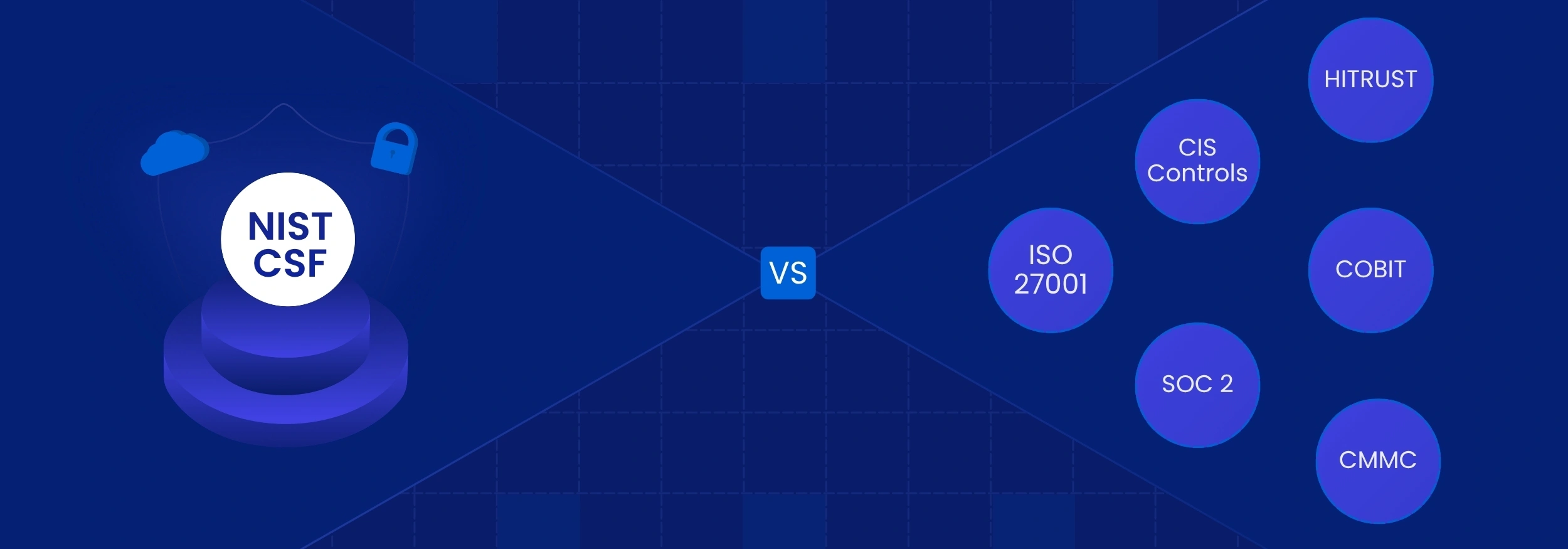
Across Africa, governments, financial institutions, healthcare providers, critical infrastructure operators, and technology companies are investing more heavily in cybersecurity to protect sensitive data and build digital resilience. However, selecting the right cybersecurity framework is not always straightforward.
Should your organization adopt the NIST CSF, pursue ISO 27001 certification, implement CIS Controls, or combine multiple frameworks? Each framework offers unique strengths, but choosing the wrong approach can lead to duplicated efforts, unnecessary compliance costs, and security gaps.
Designed to provide a flexible, risk-based approach to managing cybersecurity risks, the NIST Cybersecurity Framework has become one of the most widely adopted cybersecurity models across industries worldwide. As organizations throughout Africa accelerate digital transformation, understanding how NIST CSF 2.0 compares with other leading frameworks can help decision-makers build stronger and more effective cybersecurity programs.
This guide compares the NIST CSF with other leading frameworks and helps organizations choose the right fit.
What Is the NIST CSF?
The NIST Cybersecurity Framework (NIST CSF) is a voluntary, risk-based framework developed by the U.S. National Institute of Standards and Technology (NIST) to help organizations identify, assess, manage, and reduce cybersecurity risks.
Although originally created for critical infrastructure organizations in the United States, the framework has gained global recognition because of its flexibility and practical approach to cybersecurity governance. Today, organizations across Africa use the NIST Cybersecurity Framework to strengthen cyber resilience, improve risk management, and establish a structured approach to cybersecurity.
The latest version, NIST CSF 2.0, expands the framework beyond critical infrastructure and introduces the new Govern function, emphasizing executive oversight, cybersecurity governance, and organizational accountability.
The framework is built around six core functions
-
Govern – Establish cybersecurity governance, policies, and oversight.
-
Identify – Understand assets, risks, and business context.
-
Protect – Implement safeguards to reduce cybersecurity risks.
-
Detect – Identify cybersecurity events promptly.
-
Respond – Manage and contain cybersecurity incidents.
-
Recover – Restore operations and improve resilience following an incident.
Together, these functions provide organizations with a lifecycle approach to managing cybersecurity risks rather than simply implementing technical controls.
Why Organizations Choose the NIST CSF?
One of the primary reasons organizations adopt the NIST CSF is its flexibility. Unlike prescriptive standards that specify exactly how controls should be implemented, the framework enables organizations to tailor cybersecurity activities based on their risk profile, business objectives, and operational environment.
For organizations in Africa, where cybersecurity maturity levels and regulatory requirements vary across industries and countries, this flexibility makes the framework particularly valuable. It can be applied by small businesses beginning their cybersecurity journey as well as large enterprises managing complex digital ecosystems.
The framework also promotes stronger communication between technical teams and executive leadership by providing a common language for discussing cybersecurity risks and business priorities. Instead of focusing solely on compliance, it encourages organizations to continuously evaluate and improve their cybersecurity capabilities.
Another important feature of the framework is the use of NIST CSF Tiers, which help organizations understand the maturity of their cybersecurity risk management practices. Rather than serving as a certification, the tiers provide insight into how well cybersecurity activities are integrated into governance, decision-making, and business operations.
Strengthen your cybersecurity program with NIST CSF 2.0. Connect with Intercert to discuss your organization's cybersecurity objectives.
NIST CSF vs ISO 27001
Although NIST CSF vs ISO 27001 is a common comparison, the two frameworks are designed to address different organizational needs. Many organizations across Africa use them together to strengthen both cybersecurity and information security governance.
-
Purpose: The NIST CSF is a voluntary, risk-based framework for identifying and managing cybersecurity risks, while ISO 27001 is an internationally recognized standard for establishing and maintaining an Information Security Management System (ISMS).
-
Certification: NIST CSF is not certifiable. In contrast, organizations can obtain ISO 27001 certification through an accredited certification body.
-
Approach: NIST CSF provides flexibility, allowing organizations to implement controls based on their risk profile and business objectives. ISO 27001 follows a structured management system approach with defined requirements.
-
Governance: NIST CSF 2.0 introduces the Govern function to strengthen cybersecurity oversight. ISO 27001 embeds information security into leadership, organizational processes, and continual improvement.
-
Best Practice: Rather than choosing one over the other, many organizations use NIST CSF to manage cybersecurity risks and ISO 27001 to establish a structured, certifiable management system. Together, they create a more comprehensive approach to cybersecurity governance and resilience.
NIST CSF vs CIS Controls
The comparison between NIST CSF vs CIS Controls often comes down to strategy versus execution. While both frameworks strengthen cybersecurity, they serve different purposes and are frequently used together.
-
Purpose: The NIST CSF provides a high-level framework for managing cybersecurity risks, whereas CIS Controls offer a prioritized set of technical and operational security controls.
-
Approach: NIST CSF focuses on governance, risk management, and achieving cybersecurity outcomes. CIS Controls take a more prescriptive approach by outlining specific actions organizations can implement to reduce cyber risks.
-
Implementation: The NIST Cybersecurity Framework defines what organizations should achieve, while CIS Controls provide practical guidance on how to implement many of those cybersecurity objectives.
-
Flexibility: NIST CSF is highly adaptable to different industries and organizational needs. CIS Controls are designed to help organizations prioritize technical security improvements based on common cyber threats.
-
Best Practice: Many organizations across Africa use both frameworks together. NIST CSF provides the governance and risk management foundation, while CIS Controls strengthen day-to-day technical security, creating a well-rounded and effective cybersecurity program.
Can NIST CSF Be Implemented Alongside Other Frameworks?
A common misconception is that organizations must choose a single cybersecurity framework. Mature cybersecurity programs often combine multiple frameworks to address different business, regulatory, and operational requirements.
For example, an organization in Africa may use NIST CSF 2.0 as its overarching risk management framework while implementing ISO 27001 to establish an Information Security Management System and CIS Controls to strengthen technical security practices.
This integrated approach allows organizations to avoid duplicating efforts while creating a more comprehensive cybersecurity program. It also supports stronger governance, improves communication between business and technical teams, and simplifies future compliance initiatives.
Whether an organization is planning its first NIST CSF implementation or enhancing an existing cybersecurity program, the goal should not be to adopt every available framework. Instead, organizations should select and integrate frameworks based on their business objectives, regulatory obligations, customer expectations, and overall cybersecurity maturity.
A structured NIST CSF assessment can also help organizations understand their current cybersecurity posture, identify improvement opportunities, and prioritize investments that deliver the greatest reduction in cyber risk.
NIST CSF vs SOC 2
Organizations, particularly SaaS and cloud service providers, often compare NIST CSF vs SOC 2. While both contribute to stronger cybersecurity, they address different organizational objectives.
-
Purpose: The NIST Cybersecurity Framework provides a comprehensive approach to managing cybersecurity risks through governance, risk management, and continual improvement. SOC 2 focuses on demonstrating that security controls are effectively designed and operating over a defined period.
-
Approach: NIST CSF is a risk management framework that helps organizations build and improve their cybersecurity programs. SOC 2 is an independent attestation based on the AICPA Trust Services Criteria, evaluating the effectiveness of an organization's controls.
-
Certification vs Attestation: NIST CSF is not a certifiable framework, while SOC 2 results in an independent attestation report that organizations can share with customers and stakeholders.
-
Primary Use: NIST CSF is used to strengthen an organization's overall cybersecurity posture, whereas SOC 2 is commonly used by SaaS providers and cloud service organizations to demonstrate security assurance during customer procurement and vendor assessments.
-
Best Practice: Many organizations across Africa use NIST CSF 2.0 to establish a mature cybersecurity program and obtain a SOC 2 report to provide independent assurance to customers, partners, and enterprise clients.
NIST CSF vs HITRUST
The comparison between NIST CSF vs HITRUST is especially relevant for organizations in highly regulated industries, such as healthcare, where both cybersecurity and regulatory compliance are critical.
-
Purpose: The NIST Cybersecurity Framework is a flexible, risk-based framework designed for organizations across all industries. HITRUST is a certifiable framework that integrates multiple regulations and standards into a single assurance framework.
-
Approach: NIST CSF focuses on managing cybersecurity risks through governance and continual improvement. HITRUST combines requirements from frameworks such as HIPAA, NIST, ISO 27001, and other regulatory standards into a comprehensive, certifiable program.
-
Industry Focus: NIST CSF can be adopted by organizations in any sector, while HITRUST is primarily designed for healthcare organizations and businesses handling sensitive health information.
-
Certification: NIST CSF is not a certifiable framework, whereas HITRUST offers a formal certification process based on validated security and privacy controls.
-
Best Practice: Many healthcare organizations use NIST CSF as their overarching cybersecurity risk management framework while leveraging HITRUST to demonstrate industry-specific compliance, governance, and operational resilience.
NIST CSF vs COBIT
While NIST CSF and COBIT both emphasize governance, they are designed to address different aspects of organizational management.
-
Purpose: The NIST Cybersecurity Framework focuses specifically on managing cybersecurity risks, while COBIT provides a broader framework for enterprise IT governance and management.
-
Approach: NIST CSF helps organizations identify, protect, detect, respond to, and recover from cyber threats. COBIT aligns IT processes with business objectives, supports performance measurement, and strengthens executive oversight.
-
Focus Area: NIST CSF is centered on cybersecurity risk management, whereas COBIT addresses overall IT governance, decision-making, and value delivery across the organization.
-
Primary Use: Organizations use NIST CSF to improve their cybersecurity posture, while COBIT is adopted to enhance enterprise-wide IT governance and ensure technology investments align with business goals.
-
Best Practice: Many organizations across Africa use both frameworks together. COBIT provides enterprise-wide IT governance, while NIST CSF strengthens cybersecurity governance, creating better alignment between technology, business strategy, and risk management.
NIST CSF vs CMMC
The comparison between NIST CSF vs CMMC is particularly important for organizations that work with the U.S. Department of Defense (DoD) or participate in its supply chain.
-
Purpose: The NIST Cybersecurity Framework is a voluntary framework for managing cybersecurity risks, while Cybersecurity Maturity Model Certification (CMMC) is a mandatory certification program for qualifying DoD contractors.
-
Approach: NIST CSF provides flexible, risk-based guidance for improving cybersecurity. CMMC establishes specific cybersecurity practices and maturity requirements that organizations must meet to handle Controlled Unclassified Information (CUI).
-
Foundation: CMMC builds upon the security requirements outlined in NIST SP 800-171, adding certification and assessment requirements for defense contractors.
-
Certification: NIST CSF is not a certifiable framework, whereas CMMC requires organizations to achieve certification based on their required maturity level.
-
Best Practice: For organizations across Africa working with international defense organizations or global supply chains, understanding the relationship between NIST CSF and CMMC can strengthen cybersecurity readiness while supporting contractual and regulatory requirements.
How to Choose the Right Cybersecurity Framework?
There is no single cybersecurity framework that fits every organization. The right choice depends on several business and operational factors.
Consider the following when selecting a framework:
-
Industry Requirements: Healthcare, finance, manufacturing, and government sectors often have different regulatory expectations.
-
Customer Expectations: Enterprise customers may request ISO 27001 certification, SOC 2 reports, or evidence of NIST CSF compliance.
-
Business Objectives: Organizations should determine whether they need a risk management framework, a certifiable management system, or customer assurance through independent attestation.
-
Organizational Maturity: Smaller organizations may begin with the NIST Cybersecurity Framework, while larger enterprises often integrate multiple frameworks over time.
-
Regulatory Obligations: Local regulations and international customer requirements should influence framework selection.
Across Africa, organizations increasingly adopt integrated governance models rather than relying on a single framework, allowing them to address multiple business and compliance objectives simultaneously.
Strengthen your cybersecurity program with NIST CSF 2.0. Connect with Intercert to discuss your organization's cybersecurity objectives.
Common Mistakes Organizations Make
Organizations often face challenges not because they selected the wrong framework, but because they approached cybersecurity strategically in the wrong way.
Some of the most common mistakes include:
-
Selecting a framework solely because competitors use it.
-
Treating compliance as the end goal instead of managing cybersecurity risks.
-
Duplicating controls across multiple frameworks.
-
Failing to align cybersecurity with business objectives.
-
Ignoring executive leadership and governance responsibilities.
-
Delaying regular NIST CSF assessments to measure cybersecurity maturity.
-
Assuming certification automatically improves cybersecurity.
Avoiding these pitfalls allows organizations to maximize the value of whichever framework they choose.
Best Practices for Framework Adoption
Successful organizations treat cybersecurity frameworks as long-term governance programs rather than short-term compliance initiatives.
Some recommended best practices include:
-
Begin with a comprehensive risk assessment.
-
Clearly define business and cybersecurity objectives.
-
Map existing controls before adopting additional frameworks.
-
Use integrated governance to reduce duplicate compliance efforts.
-
Measure cybersecurity maturity regularly using NIST CSF Tiers.
-
Review cybersecurity risks as technologies and threats evolve.
-
Engage executive leadership throughout the cybersecurity journey.
-
Treat NIST CSF implementation as an ongoing process of continual improvement.
These practices help organizations establish resilient cybersecurity programs capable of adapting to changing business and threat environments.
Choosing a Framework That Supports Business Growth
Cybersecurity frameworks are designed to address different aspects of risk management, governance, and organizational resilience. Whether an organization is evaluating NIST CSF vs ISO 27001, NIST CSF vs CIS Controls, or other widely adopted frameworks, the right choice depends on its business objectives, regulatory obligations, customer expectations, and cybersecurity maturity.
For organizations across Africa, the NIST Cybersecurity Framework provides a flexible and scalable foundation for managing cyber risks. When combined with complementary frameworks such as ISO 27001, SOC 2, HITRUST, COBIT, or CMMC, it enables organizations to build a more comprehensive and resilient cybersecurity program.
A strong cybersecurity program extends beyond selecting the right framework, it also requires effective governance and continual improvement. Through accredited certification services for internationally recognized management system standards, INTERCERT enables organizations to demonstrate that their management systems align with globally recognized best practices, reinforcing confidence among customers, partners, and other stakeholders.


 +1 (281) 720-3261
 info@intercert.com
 2001 Timberloch Place - Suite 500, The Woodlands, Texas 77380, United States