


ISO 27001 Certification in Africa: Requirements in 2026
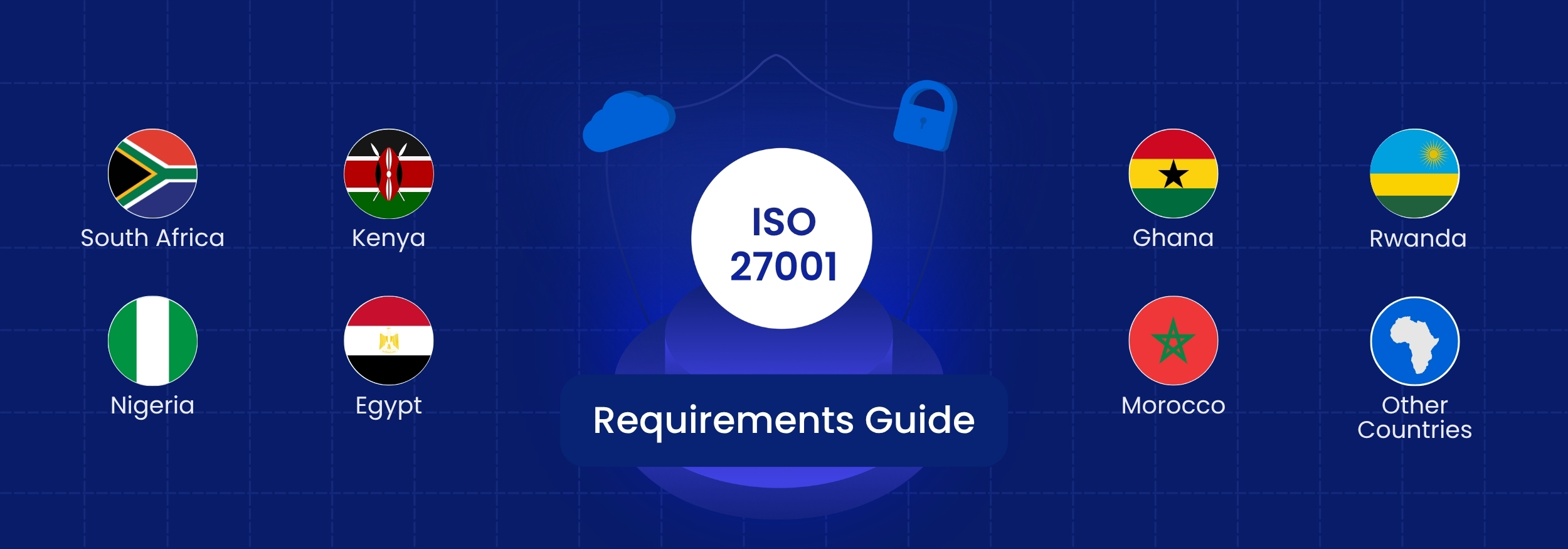
Across Africa, organizations are embracing digital transformation at an unprecedented pace. From fintech startups in Nigeria and Kenya to financial institutions in South Africa and government initiatives in Egypt, digital technologies are reshaping how businesses operate and deliver services. As organizations handle increasing volumes of sensitive information, strengthening information security has become a business priority rather than just an IT concern.
This growing focus on security has led many organizations to explore ISO 27001 Certification Africa as a way to demonstrate their commitment to protecting information assets and meeting customer expectations. While the requirements of ISO 27001 remain the same worldwide, organizations operating across Africa must also comply with country-specific regulations, making it essential to understand both the international standard and the local legal landscape.
This guide explains the ISO 27001 Certification Requirements Africa, highlights key regulatory considerations across major African countries, and outlines the ISO 27001 Certification Process Africa to help organizations build a robust Information Security Management System (ISMS).
What is ISO 27001 Certification?
ISO/IEC 27001:2022 is the internationally recognized standard for establishing, implementing, maintaining, and continually improving an Information Security Management System (ISMS). Developed by the International Organization for Standardization (ISO) and the International Electrotechnical Commission (IEC), it provides organizations with a structured framework for identifying information security risks and implementing appropriate controls to manage them.
Moreover, ISO 27001 follows a risk-based approach. Organizations are expected to identify the information assets they need to protect, assess potential threats and vulnerabilities, and implement controls that are appropriate for their business objectives and risk profile.
The standard is built around the Plan-Do-Check-Act (PDCA) model, promoting continual improvement of the ISMS through regular monitoring, internal audits, management reviews, and corrective actions.
Achieving ISMS Certification Africa shows that an organization's information security practices have been independently assessed against internationally accepted requirements. For businesses operating in highly regulated industries or serving international customers, ISO 27001 can strengthen customer confidence, improve risk management, and support regulatory compliance.
Is ISO 27001 Recognized Across Africa?
A common misconception is that organizations need different versions of ISO 27001 depending on the African country in which they operate. In reality, ISO 27001 is an international standard, meaning the certification requirements are consistent worldwide.
Whether an organization pursues Information Security Certification South Africa, ISO 27001 Certification Nigeria, ISO 27001 Certification Kenya, or ISO 27001 Certification Egypt, the audit is conducted against the same ISO/IEC 27001:2022 requirements.
What determines the credibility of a certificate is not the country where it is issued, but whether it has been awarded by an ISO 27001 Accredited Certification Body Africa that operates under internationally recognized accreditation arrangements. Certification bodies accredited by members of the International Accreditation Forum (IAF) issue certificates that are widely accepted by customers, regulators, and business partners around the world.
What Stays the Same Across Every African Country?
Although national regulations differ across Africa, the core requirements of ISO 27001 remain identical regardless of where an organization operates. Every organization seeking certification must establish an Information Security Management System that complies with the requirements defined in ISO/IEC 27001:2022.
The requirements remain consistent whether your organization operates in South Africa, Nigeria, Kenya, Egypt, Ghana, Morocco, Rwanda, or any other African country. Some of the key ISO 27001 Certification Requirements Africa include:
-
Understanding the Organization's Context
Organizations must identify internal and external factors that influence their information security objectives, understand the expectations of interested parties, and define the scope of their ISMS.
-
Leadership and Governance
Senior management is expected to demonstrate leadership by establishing an information security policy, assigning roles and responsibilities, and ensuring that adequate resources are available to maintain the ISMS.
-
Risk Assessment and Risk Treatment
Organizations must identify information security risks, evaluate their potential impact, and implement appropriate risk treatment measures. This risk-based approach forms the foundation of ISO 27001.
-
Information Security Controls
Organizations select and implement relevant controls from Annex A based on their risk assessment. These controls cover areas such as access management, cryptography, supplier relationships, incident management, physical security, and business continuity.
-
Performance Evaluation
The effectiveness of the ISMS must be regularly monitored through internal audits, management reviews, and performance measurement to ensure that security objectives continue to be achieved.
-
Continual Improvement
ISO 27001 requires organizations to continually improve their ISMS by addressing audit findings, correcting identified weaknesses, and adapting to evolving business and cybersecurity risks.
Demonstrate your commitment to protecting critical information through internationally recognized ISO/IEC 27001 Certification that builds trust with customers and stakeholders.
What Changes from Country to Country?
While the ISO 27001 standard itself remains globally consistent, organizations operating across Africa must also comply with the legal and regulatory requirements applicable in the countries where they conduct business. These obligations often influence how an organization designs, implements, and maintains its Information Security Management System (ISMS).
-
Data Protection Laws
Organizations processing personal information must comply with the applicable Data Protection Laws Africa, which vary across countries. For example, South Africa enforces the Protection of Personal Information Act (POPIA), Kenya has the Data Protection Act, 2019, Nigeria follows the Nigeria Data Protection Act (NDPA) 2023, and Egypt has the Personal Data Protection Law No. 151 of 2020. These regulations establish requirements for areas such as personal data processing, privacy rights, breach notification, and accountability.
-
Industry-Specific Regulations
Certain industries are subject to additional cybersecurity and regulatory obligations. Financial institutions, healthcare providers, telecommunications companies, and government suppliers often need to meet sector-specific security requirements alongside ISO 27001. For example, organizations focused on African Fintech Security Compliance may also need to comply with regulations issued by financial regulators in their respective countries.
-
Legal and Regulatory Compliance
Achieving Cybersecurity Compliance Africa involves more than obtaining an ISO 27001 certificate. Organizations must ensure that their ISMS aligns with both the requirements of ISO/IEC 27001:2022 and the national laws, regulations, and customer expectations applicable in the countries where they operate. This integrated approach strengthens regulatory compliance while enhancing customer trust and information security governance.
Country-by-Country Regulatory Considerations for ISO 27001 in Africa
While the ISO 27001 Certification Requirements Africa remain the same across the continent, organizations must also consider country-specific legal and regulatory obligations when implementing their Information Security Management System (ISMS). Below are some of the key regulatory considerations for organizations operating in major African markets.
South Africa
South Africa has one of the most mature information security and privacy landscapes in Africa. Organizations pursuing Information Security Certification South Africa should consider the Protection of Personal Information Act (POPIA), which establishes requirements for the lawful processing of personal information. Businesses operating in regulated sectors such as banking, insurance, healthcare, telecommunications, and government contracting are also expected to maintain strong information security controls.
For many organizations, ISO 27001 provides a structured framework for managing information security risks while supporting compliance with POPIA and customer security expectations.
Kenya
Kenya's digital economy has grown rapidly, particularly in fintech, telecommunications, and digital payment services. Organizations seeking ISO 27001 Certification Kenya should align their ISMS with the Data Protection Act, 2019, which is enforced by the Office of the Data Protection Commissioner (ODPC).
Companies processing personal data are expected to implement appropriate security measures, manage privacy risks, and establish governance processes that protect customer information. ISO 27001 complements these requirements by providing a systematic approach to information security management.
Nigeria
As one of Africa's largest technology and financial services markets, Nigeria has seen significant growth in cybersecurity and privacy regulations. Organizations pursuing ISO 27001 Certification Nigeria should consider the Nigeria Data Protection Act (NDPA) 2023, which establishes obligations for organizations handling personal data.
ISO 27001 is particularly relevant for Nigerian fintech companies, financial institutions, cloud service providers, and technology organizations that manage sensitive customer information. A certified ISMS demonstrates a structured approach to risk management and strengthens confidence among regulators, customers, and business partners.
Egypt
Organizations seeking ISO 27001 Certification Egypt should consider the country's Personal Data Protection Law No. 151 of 2020, which governs the collection, processing, storage, and transfer of personal data.
As Egypt continues to invest in digital transformation across government and private sectors, organizations are increasingly expected to demonstrate robust information security practices. Implementing ISO 27001 can help organizations establish consistent governance processes while supporting compliance with national data protection requirements.
Ghana
Ghana's Data Protection Act, 2012 requires organizations to implement appropriate measures to safeguard personal information. Businesses operating in sectors such as financial services, telecommunications, healthcare, and public services often pursue ISO 27001 to strengthen information security governance and demonstrate their commitment to protecting customer data.
Morocco
Organizations operating in Morocco should consider Law 09-08, which regulates the processing of personal data under the supervision of the National Commission for the Control of Personal Data Protection (CNDP). Export-oriented businesses and organizations serving international customers frequently adopt ISO 27001 to align their security practices with globally recognized standards.
Rwanda
Rwanda continues to strengthen its digital economy through national cybersecurity initiatives and modern data protection legislation. Organizations implementing ISO 27001 can establish an effective ISMS while supporting compliance with the country's evolving privacy and cybersecurity requirements.
Other African Countries
Countries including Uganda, Tanzania, Zambia, Botswana, Namibia, and several others are also expanding their cybersecurity and data protection frameworks. Although regulatory maturity varies across the continent, organizations increasingly recognize ISO 27001 as an effective framework for managing information security risks and demonstrating international best practices.
Build confidence with an internationally recognized ISO/IEC 27001 Certification that demonstrates your commitment to protecting sensitive information and managing security risks.
ISO 27001 Certification Process Africa
Although local regulations may differ, the ISO 27001 Certification Process Africa follows the same internationally recognized certification methodology.
-
Define the Scope
The certification journey begins by determining the scope of the Information Security Management System. Organizations identify the locations, business functions, technologies, and information assets that will be covered by the ISMS.
-
Develop the Information Security Management System
Next, organizations establish policies, procedures, roles, and governance structures required by ISO 27001. The ISMS should align with the organization's business objectives while addressing applicable legal, regulatory, and customer requirements.
-
Conduct Risk Assessment and Risk Treatment
A comprehensive risk assessment is performed to identify threats, vulnerabilities, and potential business impacts. Based on the findings, organizations implement appropriate controls to reduce identified risks to acceptable levels.
-
Implement Security Controls
The selected controls from Annex A are implemented according to the organization's risk treatment plan. These may include access control, asset management, supplier security, incident response, business continuity, cryptography, and monitoring controls.
-
Perform Internal Audits and Management Reviews
Before the certification audit, organizations evaluate the effectiveness of their ISMS through internal audits and management reviews. These activities help identify improvement opportunities and confirm that the system is functioning as intended.
-
Stage 1 and Stage 2 Certification Audits
An accredited certification body conducts the certification audit in two stages. Stage 1 reviews the organization's ISMS documentation and readiness, while Stage 2 evaluates the implementation and effectiveness of the ISMS in practice.
-
Certification and Surveillance Audits
Once the organization successfully completes both audit stages, it receives ISO 27001 certification. To maintain certification, periodic surveillance audits are conducted to verify that the ISMS continues to meet the requirements of the standard.
The overall ISO 27001 Certification Timeline Africa varies depending on factors such as organizational size, operational complexity, existing security maturity, and the scope of certification. While timelines differ, organizations with well-established governance processes and management commitment often complete the certification journey more efficiently.
Advancing Information Security with ISO 27001 Certification
Although the ISO 27001 Certification Requirements Africa remain consistent worldwide, understanding the legal and compliance landscape of each country is equally important for building an effective Information Security Management System.
Whether your organization is pursuing Information Security Certification South Africa, ISO 27001 Certification Nigeria, ISO 27001 Certification Kenya, ISO 27001 Certification Egypt, or operating across multiple African markets, aligning internationally recognized information security practices with local regulatory obligations strengthens resilience, builds stakeholder confidence, and creates a solid foundation for sustainable business growth.
As an accredited certification body with an international presence, INTERCERT provides ISO 27001 certification services for organizations seeking independent certification against ISO/IEC 27001:2022. Choosing an accredited certification body demonstrates your organization's commitment to globally recognized information security practices while enhancing trust with customers, regulators, and business partners across Africa and beyond.


 +1 (281) 720-3261
 info@intercert.com
 2001 Timberloch Place - Suite 500, The Woodlands, Texas 77380, United States